
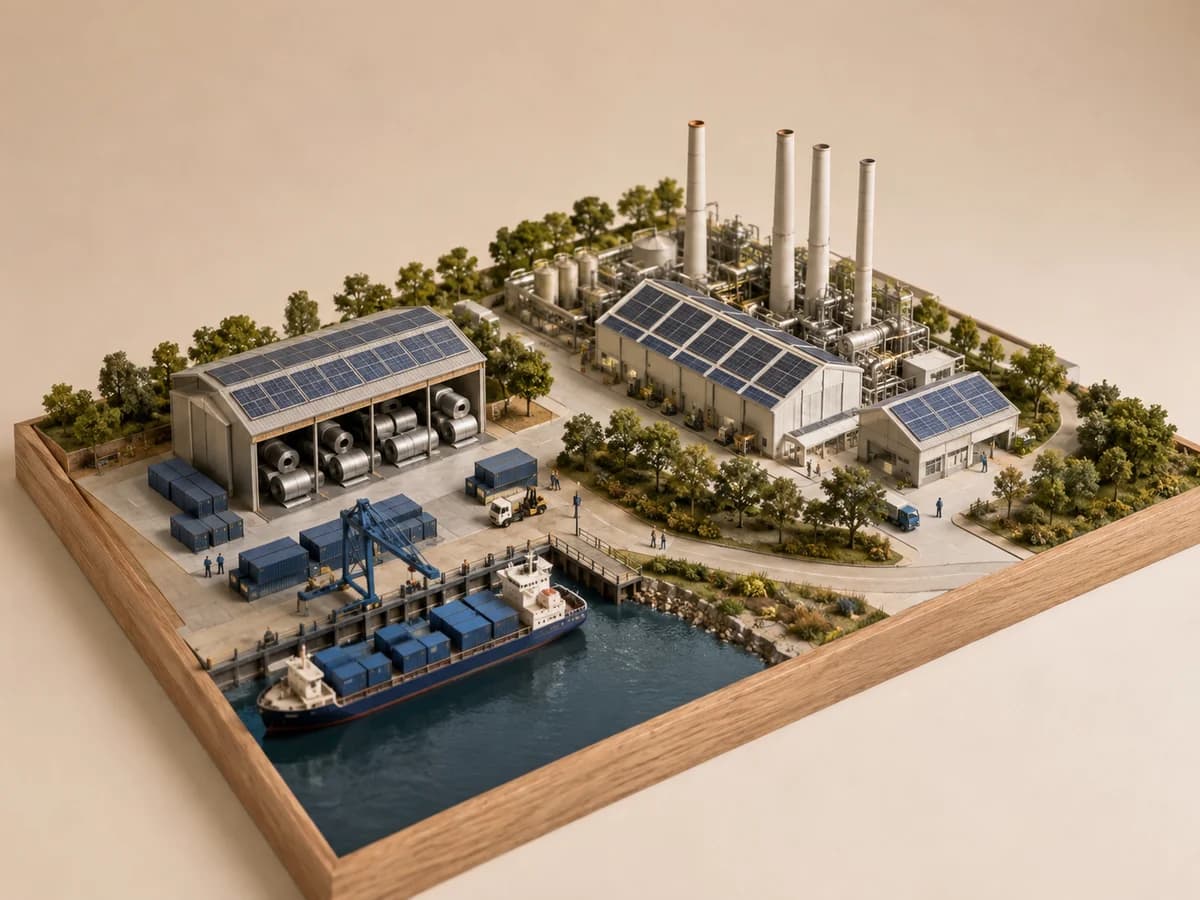
CBAM
CBAM carbon data and reporting preparation
If exported goods to the EU fall under the scope of CBAM, customers need not only the total carbon emissions of the entire factory but also how the products are produced, which precursors are used, and how emission data is calculated. Vosurein provides CBAM carbon data and declaration preparation guidance, helping manufacturers and traders organize factory data and verify calculation methods, ensuring that information submitted to EU declarants is verifiable.
For Your Business
Who this service is for and when to start
Check whether CBAM applies when an EU customer sends an emissions data form, when preparing to supply a new product or when continuing data work from the transitional period. Start with the product's CN code, origin and import arrangements. Products in the same metals sector may be subject to different requirements.
CBAM entered its official phase on January 1, 2026. If you expect to respond to customers based on actual emissions, it is recommended to arrange process data collection and verification preparation while production and procurement records are still traceable. The customer's receipt date may be earlier than the EU annual reporting deadline, so scheduling must be based on bilateral delivery arrangements.
The Challenge
Common challenges faced by businesses
Data gaps often arise between factory-level and product-level records. A company may have an annual greenhouse gas inventory, while its customer needs a particular product's embedded emissions. Procurement may have raw material weights without knowing which factory the upstream emissions data describes. Where products share equipment, the allocation of energy use and process emissions must also be explained.
For a factory making several steel products, annual electricity bills can help reconcile total electricity use but cannot explain each product's calculation on their own. Compare production volumes, processes, measurements and upstream records before deciding which missing documents to request first. This approach to organising data does not imply a single allocation method for every product.
Also check the template version. Review quarterly data from the 2023 to 2025 transitional period against the definitive regime's requirements. Older forms may be a starting point, but calculation, verification and delivery fields still need updating.
Our Approach
Methods and applicable requirements
The definitive CBAM regime covers specified goods listed in the regulatory annexes, including cement, iron and steel, aluminium, fertilisers, electricity and hydrogen. Check CN codes and customs classifications first, then determine the direct emissions, indirect emissions and precursors to include for each product. Organisational inventories or product carbon footprints can provide underlying data, but must be reassessed against CBAM boundaries and methods.
The 50-tonne threshold applies per importer:Each EU importer must total the net mass of goods within scope over a calendar year. Electricity and hydrogen are excluded from this exemption. Once the threshold is exceeded, the obligations cover all goods within scope imported during that year. Suppliers should therefore retain transaction and production records from the start of the year.
2026 Data Delivery Milestones:The first annual declaration and certificate surrender for goods imported in 2026 are due on 30 September 2027. Certificate sales begin in February 2027. The EU side handles declarations and certificates; the Taiwan side generally prepares production and emissions data. Agree on responsibilities and data-delivery dates in advance.
Actual emissions must be verified by an independent verifier with the required CBAM accreditation. For default values, confirm the rules and version applicable to the reporting period. Default values for the definitive regime have been amended, so calculation records should identify the version used for verification and customer review.
Treat embedded emissions and the number of certificates to surrender separately. The latter also accounts for EU ETS free allocation adjustments and eligible deductions for carbon prices already paid. Buyers and sellers agree on cost sharing under their commercial arrangements. Consulting clarifies these roles, data and calculations before preparing customer responses.
Process
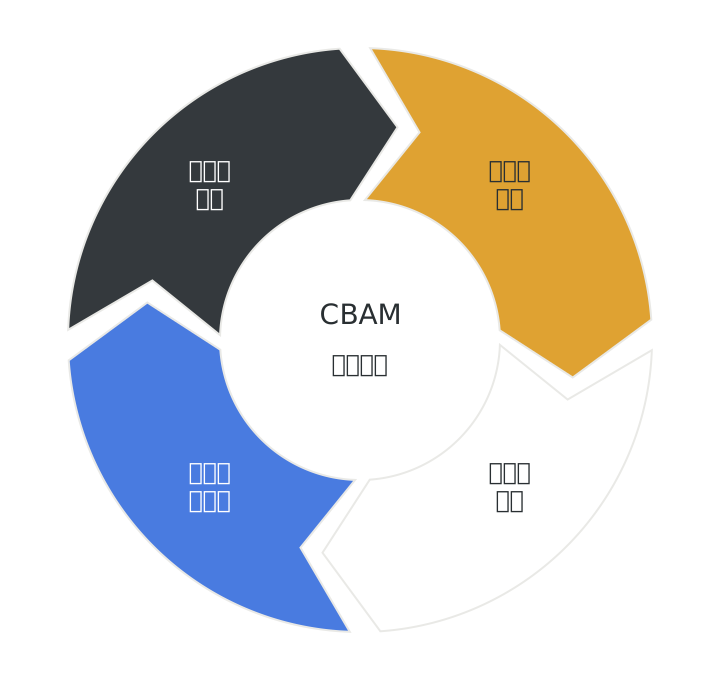
Consulting scope and process
Product and role confirmation
Confirm CN codes, country of origin, production facilities, and year from the export list and customer requirements, clarifying who provides factory data, who compiles transaction information, and who undertakes the EU declaration responsibilities.
Process and data setup
Organise production volumes, energy use and precursors along each product's production route. Assign each data field to the department holding the relevant records. Log missing data and how to obtain it, and retain the original supporting documents.
Embedded emissions calculation and checks
Organize calculations according to the applicable product methods, checking weight, units, coefficients, and allocation basis item by item. Track items that need supplementing upstream and items awaiting verification separately to avoid unconfirmed numbers mixing into the delivered version.
Customer responses and subsequent maintenance
Organize emission data and supporting indexes according to customer-required formats, assist in answering calculation inquiries, and prepare verification data. Keep versions and modification records after delivery for verification in subsequent years and for other customer requests.
Preparation
What documents do companies need to prepare?
You can start with the following four types of existing records; it is not necessary to organize all files into a single report first:
- Products and Transactions:Product name and CN code, country of origin, export quantity for each year, EU customers and their data sheets, delivery deadlines.
- Factory and Process:List of production facilities, process diagrams, production volume of each product and shared equipment, and indicate which factory produces each product.
- Energy and Precursors:Fuel and electricity usage, input quantities of raw materials and semi-finished products, as well as emission data provided upstream and their corresponding sources.
- Calculations and Evidence:Original invoices, measurement records, coefficient versions, existing calculation and verification documents; if carbon price has been paid, prepare additional relevant proof.
For each piece of data, indicate the period, unit, and factory. Whether third-country carbon prices can be deducted must comply with applicable rules and proof requirements; it cannot be judged based solely on the invoice name.
Project Planning
Estimating time and cost
Costs and scheduling should first consider how many products, factories, and production paths need to be processed, then see whether precursor data is complete. Even for several items, if existing calculation data is shared, the workload differs from having to track upstream data for each case individually.
After confirming the scope, it will list the content for data construction, calculation verification, client Q&A, and verification preparation, as well as arrange the time for the company and upstream parties to provide additional documents. Costs for third-party verification, applicable platform fees, and CBAM certificate costs will be confirmed separately to avoid mixing statutory costs with advisory quotes.
FAQ
Frequently asked questions
Do Taiwanese exporters need to purchase CBAM certificates directly?
Normally, the purchase and submission obligations are borne by the EU-authorized CBAM declarants. Whether Taiwanese companies bear the related commercial costs depends on the transaction arrangement and should not be confused with statutory declaration responsibilities.
Do exporters supplying less than 50 tonnes a year still need to prepare?
The 50-tonne threshold is based on each EU importer's total net mass of goods within scope in a calendar year, not on an individual Taiwanese supplier's exports. Electricity and hydrogen are excluded from this exemption. Purchases from different suppliers by the same importer must be counted together.
Can an ISO 14067 report be directly used as CBAM data?
It cannot be directly considered the same. Product carbon footprints and CBAM may differ in boundaries, calculation rules, and evidence requirements. Basic data can be reused, but applicability must be re-verified.
If there is already an organizational carbon inventory, what additional work is needed?
It is still necessary to link product and process quantities, energy, and precursors, and check allocations and regulatory boundaries. Factory total emissions are not sufficient to directly answer the embedded emissions for each product.
Does advisory service include verification and formal EU declaration?
It depends on the scope confirmed by both parties. Advisory services can assist with data and verification preparation; verification conclusions and formal declarations must be completed by qualified and authorized responsible parties.
If a customer's imports exceed 50 tonnes during the year, must only the excess be declared?
No. According to current threshold rules, once an EU importer exceeds the threshold within the calendar year, the obligation covers the embedded emissions of all applicable imports for that year, not just the excess quantity. Exporters should retain supply data from the beginning of the year so clients can retrospectively verify.
Can our existing greenhouse gas verifier also verify CBAM emissions?
Not necessarily. Actual CBAM emissions verification must be conducted by an independent verifier accredited for CBAM and should confirm the scope of industry coverage within the accreditation. Existing ISO carbon audit verification experience does not automatically equate to CBAM qualification; accreditation information must be checked before commissioning.
Related
Related services and enquiries
Please provide the main export products along with their CN codes, country of production, number of factories, and the delivery dates required by EU customers, to facilitate confirmation of the scope of data preparation.Consult with Vosurein
Content checked: . Applicable versions and requirements depend on the company’s circumstances.
Let's Talk
Start a conversation about your needs.
Tell us how the work is done today and when you hope to finish,
so we can agree the scope and way of working together.


Blog
Sustainability and AI insights
Start with understanding,
and see where change can lead.