

SBTi
SBTi science-based target setting and submission support
Setting science-based emissions reduction targets starts with understanding the company’s emissions, then choosing the target scope, timeframe and reduction methods under the applicable SBTi criteria. Vosurein reviews emissions inventories, models targets and prepares submission documents. We also check energy, equipment and supplier measures so the targets can be managed through the company’s annual planning.
For Your Business
Who this service is for and when to start
Enterprises can first confirm the applicable pathway when faced with customer reduction requests, preparing for their first SBTi submission, or needing to update existing targets. Organizational restructuring, changes in emission structure, and targets approaching expiration should also be reviewed against existing data and plans.
Enterprises that have not yet fully organized Scope 1, 2, and 3 can first conduct a readiness assessment to clarify which categories and baseline year data are missing. At this stage, planning for inventory supplementation and reduction options discussions can take place; official targets still require support with compliant data.
The Challenge
Common challenges faced by businesses
The preparation of targets is most likely to get stuck when data collection and implementation are done separately: the scope covered by the inventory differs from the submission, baseline year data are incomplete, or the reduction commitments do not correspond to equipment and procurement plans. These differences need to be checked before submission, rather than waiting to be addressed item by item during review.
Measures can overlap. For example, counting electricity savings from efficient equipment again under a renewable electricity procurement plan would overstate emissions reductions. Target modelling uses a single inventory and distinguishes measures already implemented, approved or still under evaluation.
In 2026, companies also need to check the transition between versions. Distinguish the requirements currently accepted for submission, preparation for the new version and tools still being tested. The chosen version affects target wording, calculations and supporting evidence.
Our Approach
Methods and applicable requirements
The GHG Protocol provides the basis for emission accounting, while SBTi evaluates reduction targets according to enterprise conditions. First, confirm the type, industry, size, and emission activities of the enterprise, then select the general enterprise, financial institution, applicable SME, or sector pathway; for activities involving forestry, land, and agriculture, also review applicable rules like FLAG.
Choose the version for the submission date: Corporate Net-Zero Standard V2.0 was released in June 2026 and is expected to open for target submissions in the first quarter of 2027. From opening until January 31, 2028, V1.3.1 or V2.0 can be used according to official arrangements; from February 1, 2028, new submissions must adopt V2.0. For enterprises setting or updating targets in 2026, SBTi recommends continuing to prepare according to V1.3.1.
Once the pathway and version are confirmed, check the base year, target year, emissions coverage, absolute or intensity approach and any supplier engagement requirements. Each target must trace back to the company’s inventory and use the same organizational boundaries and annual figures as the submission documents and public disclosures.
Implementation planning examines the actions the company can take: which equipment investments are approved, when energy supplies will be available and which reductions depend on supplier cooperation. Record these conditions and assumptions so management can assess resources and track progress. SBTi Services validates targets; Vosurein helps prepare data, calculations and responses to review questions.
Process
Consulting scope and process
Confirm the pathway and submission timing
First, verify the company type, industry, existing commitments and goals, then confirm the expected submission month and applicable version. Companies with existing goals will also review updates and industry pathway requirements.
Review inventory and readiness
Compare organizational boundaries, base years, and Scope 1/2/3 inventories to list data gaps and issues requiring recalculation, and identify which departments supplement the data, ensuring the target estimate uses the same data.
Target setting and implementation planning
Model targets under the selected criteria and check the emissions reductions and implementation conditions for energy, process and value chain measures. Keep assumptions and approval records, and agree on departmental responsibilities, resources and annual progress tracking.
Document submission and follow-up
Prepare submission documents, check that targets, data and disclosures agree, and draft responses to review questions. Once the company has authorized and submitted the application, provide additional information requested by the reviewer and continue tracking target progress.
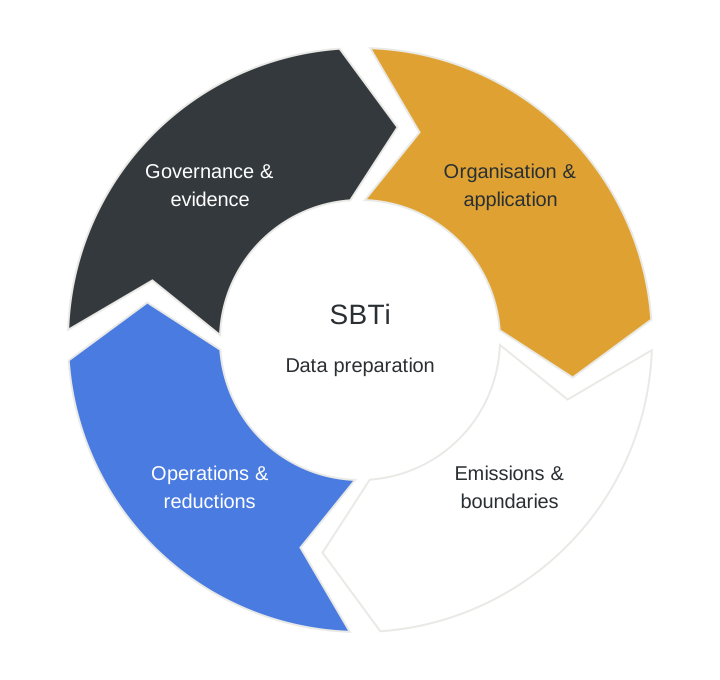
Preparation
What documents do companies need to prepare?
First, provide the completed inventory and internal plan, then confirm any items to be supplemented before submission:
- Organization and submission: Group structure, industry activities, scale, existing commitments and goals, and the expected submission timeline.
- Emissions and boundaries: Base-year and recent Scope 1, 2 and 3 inventories, calculation methods, category screening and data gaps, with the companies covered clearly identified.
- Operations and emissions reduction: Production or applicable activity indicators, energy and equipment plans, procurement and supplier measures, distinguishing between implemented, approved, and pending evaluation.
- Governance and evidence: Management approvals, departmental responsibilities, public disclosures, emissions inventory verification records and previous review correspondence.
Records must identify the year, organizational scope and calculation sources. Proposed investments can be discussed, but list them separately from approved measures so target modelling does not treat unconfirmed implementation conditions as settled.
Project Planning
Estimating time and cost
First assess whether the inventory is usable, then schedule target-setting and documentation. Allow time for data checks and internal decisions before submission if Scope 3 needs further work, multiple sector rules apply or existing targets need updating.
The agreed scope specifies readiness review, target calculations, document preparation and response arrangements. Confirm SBTi Services validation fees and review schedules, independent inventory verification and other external work separately. Consulting progress does not determine when the external review will finish.
FAQ
Frequently asked questions
Is SBTi a corporate carbon neutrality certification?
No. SBTi assesses whether a company’s emissions reduction targets meet the applicable criteria. Validated targets do not mean that the company has already reduced emissions or reached net zero, or that its products are certified carbon neutral.
Should we submit targets under V2.0 in 2026?
Official guidance recommends using V1.3.1 for preparation in 2026. Submissions under V2.0 are expected to open in the first quarter of 2027. Recheck the official arrangements against the actual submission date for each case.
Can we start before our Scope 3 inventory is complete?
You can begin with a readiness review and assessment of emissions categories. Whether a formal target meets the requirements still depends on the data required by the applicable edition. Work in progress cannot substitute for the emissions evidence required for submission.
If there is already a net-zero declaration, is there no need to set science-based targets?
A net-zero pledge is different from a target assessed against defined criteria. Specify its scope, base year, pathway and progress tracking, and check emissions from actual operations and the value chain.
Who decides whether to approve the application after submission?
SBTi Services reviews targets under the applicable process. Vosurein helps prepare data, targets and responses, but cannot guarantee the reviewer’s decision.
Is annual management still required after approval?
Yes. Companies must track and disclose progress and review changes under the applicable requirements. Changes to the organization, data or operating assumptions also require an assessment of whether targets need updating or recalculating.
Can SBTi target setting be conducted together with the GHG Protocol inventory?
The two can be planned together. The inventory provides base-year data and emissions categories; target-setting then checks coverage and methods against the applicable criteria. If significant inventory gaps remain, reduction options can be discussed first, but submitted figures must use a version whose checks have been completed.
Can purchasing carbon credits replace science-based reduction targets?
Buying carbon credits does not by itself mean that operational and value chain emissions reduction targets have been met. V2.0 provides separate arrangements for other climate contributions. These remain subject to applicable conditions and must be reported separately from the company’s emissions inventory and target progress.
Related
Related services and enquiries
Please provide the industry, enterprise and group scope, the most recent greenhouse gas inventory, existing targets, and the expected submission month to facilitate confirmation of applicable pathways and preparation sequence.Consult with Vosurein
Content checked: . Applicable versions and requirements depend on the company’s circumstances.
Let's Talk
Start a conversation about your needs.
Tell us how the work is done today and when you hope to finish,
so we can agree the scope and way of working together.


Blog
Sustainability and AI insights
Start with understanding,
and see where change can lead.